
In health facilities, health workers are expected to provide care regardless of prevailing environmental conditions. This makes it important to understand the risks posed by heat, identify opportunities for adaptation, and promote safe practices among staff.
To identify and assess risks caused by working in high temperatures in healthcare settings, Prof Jørn Toftum, head of the indoor environment section at the Technical University of Denmark, recently developed a simple checklist which allows health facilities to screen for heat-related risks and identify potential measures to reduce them. Using this practical tool, the user (A) assesses workplace heat stress, (B) evaluates working conditions, and (C) examines building infrastructure. The ultimate goal is to protect health workers’ health and wellbeing while maintaining the quality of care, which is one of the objectives of the HIGH Horizons project.
Who can use the checklist
The checklist combines existing standardized methods for managing hot working environments and adapts them for health facilities. A particular focus is placed on building features that influence heat exposure, many of which can be modified to reduce risk. Some checklist items include comments that suggest potential remediation and give a description about why an item was included and how to interpret the response options.
The tool should be used by health workers with an engagement in occupational health, or facility managers with a responsibility of securing an appropriate work environment. Also, if they wish, health workers can use the procedure to screen and assess their own working environment. However, using the procedure requires knowledge of some of the terms and definitions that are relevant for assessing occupational heat stress, although expert knowledge is not required.
This assessment procedure is not intended to perform a detailed, analytical evaluation of the risks involved in working in heat, but rather to serve as a screening tool for observable elements. However, the checklist items can be supported by simple measurements such as temperature when feasible.
(A) Assessing the workplace heat stress
Heat exposure is evaluated using factors such as air temperature, humidity, thermal radiation, air movement, clothing, and physical workload. Each factor is scored by an assessor to provide a simple quantitative measure of overall heat risk. Based on these scores, risk severity is classified. A high score indicates the workplace requires critical attention, though every individual factor at or above the no-risk level should be evaluated carefully.
Air Temperature Scoring Example
| Air Temperature | Score | Criterion |
| Air temperature does not cause problems | 0 | Low (18 o C to 25 o C) |
| Air temperature might cause problems | 1 | Moderate (25 o C to 32 o C) |
| Air temperature definitely causes problems | 2 3 | High (32 o C to 40 o C) or Very high (higher than 40 o C) |
Comment: A high air temperature reduces the potential for convective heat loss from the body. If air temperature is higher than skin temperature, e.g. 40o C, in principle, the body gains heat from the environment through convective heat exchange.
Potential remediation: if 1 (at high or very high workload – see item 7 in the checklist attached below; Physical workload), 2 or 3: Reduce temperature through ventilation or air-conditioning
(B) Assessing the working situation
The working situation is assessed differently. The items in this section assist in identifying potential risk factors caused by the work itself. The procedure assesses work/rest schedules, opportunities for recovery after high heat exposure, adaptive behavioural measures, such as adjusting clothing or the workload, the level of physiological acclimatisation of staff to heat, possibilities to continuously stay hydrated, health and safety awareness and training of staff and management.
(C) Assessing the building
The final section examines building features that influence indoor heat exposure. It focuses on observable elements such as ventilation systems. Key factors include:
- Window size, orientation, and operability
- Solar shading and external protection
- Possibilities for natural ventilation and night cooling
- Internal heat sources and material properties of the building (e.g., heavy vs light materials)
For example, buildings with heavy materials can retain cooler temperatures overnight if adequately ventilated, helping reduce heat stress during the day.
Pilot Testing in Zimbabwe
The assessment tool was pilot-tested in three rural health facilities in Zimbabwe. Fifteen staff members, including nurses, midwives, and administrative and maintenance personnel, participated. These participants were interviewed to assess the clarity and usability of the checklist.
Responses showed minor variations in their responses to different items in the tool such as differing descriptions of room occupancy or window orientation but overall, participants agreed that the checklist accurately reflected the heat related conditions they experienced.
The pilot identified areas needing attention, including:
- Training of health workers on rapidly recognizing heat-related illness
- Use of night ventilation to cool facilities
- Reducing direct solar radiation exposure
This pilot in Zimbabwe involved a small sample and occurred during winter, a period where no severe heat exposure was reported. The responses to the assessment are based on staff perceptions and additional testing of the tool is needed in other settings and seasons. However, the pilot highlighted the checklist’s potential to identify areas for improvement.

Building’s Description: The building shown above is the maternal unit at Mt. Darwin Hospital in Zimbabwe, one of the pilot sites. Trees offer external shade, windows can be opened, and the brick façade is moderately heavy but uninsulated. The building has efficient solar shading (overhangs) and a few other features, but it is not be designed to withstand or reject heat. It is as a moderately good example of heat resilient design. It could be worse with increased heat exposure.
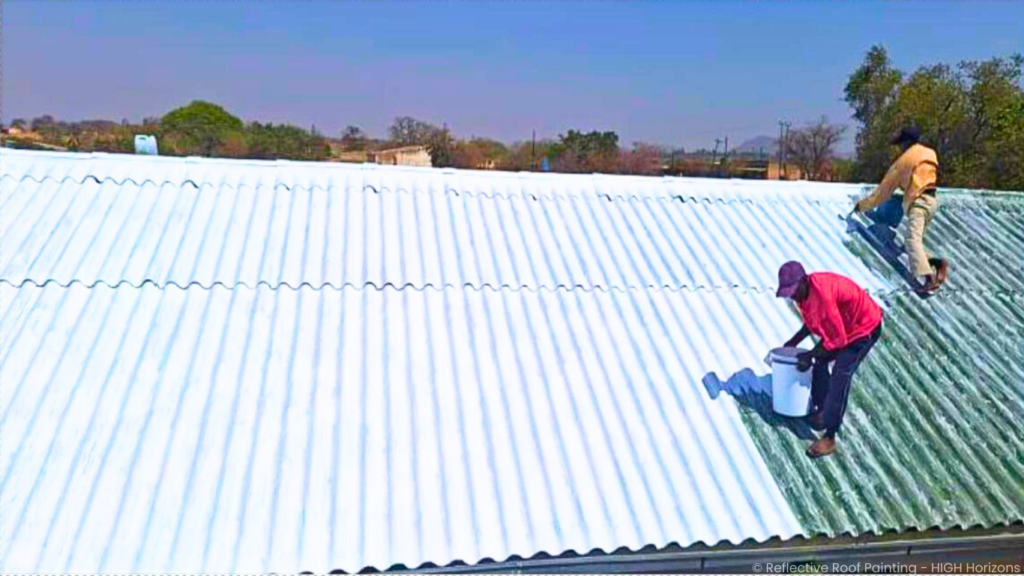
Recommendations: Windows with better insulating properties, better opportunities for ventilation, reflective roof, insulated facades and ceiling,
Other Heat Assessment Procedures
Several international guidelines exist for managing heat stress in workplaces. For example, the World Health Organization has developed checklists for assessing climate-related vulnerabilities in health facilities. International standards provide recommendations for reducing occupational heat stress and methods for risk assessment.
The HIGH Horizons Checklist does not introduce entirely new content but adapts these standards into a practical framework for rapid assessment, specifically for health facilities in hot climates, helping staff and managers identify risks and take actionable steps.
The checklist can be downloaded here
At HIGH Horizons we are promoting the integration of climate adaptation and mitigation into maternal, newborn, and child health services & strengthening health system resilience.
Follow us on LinkedIn at HIGHHorizons and visit our blog at highhorizons.eu to learn more about our work & stay updated
