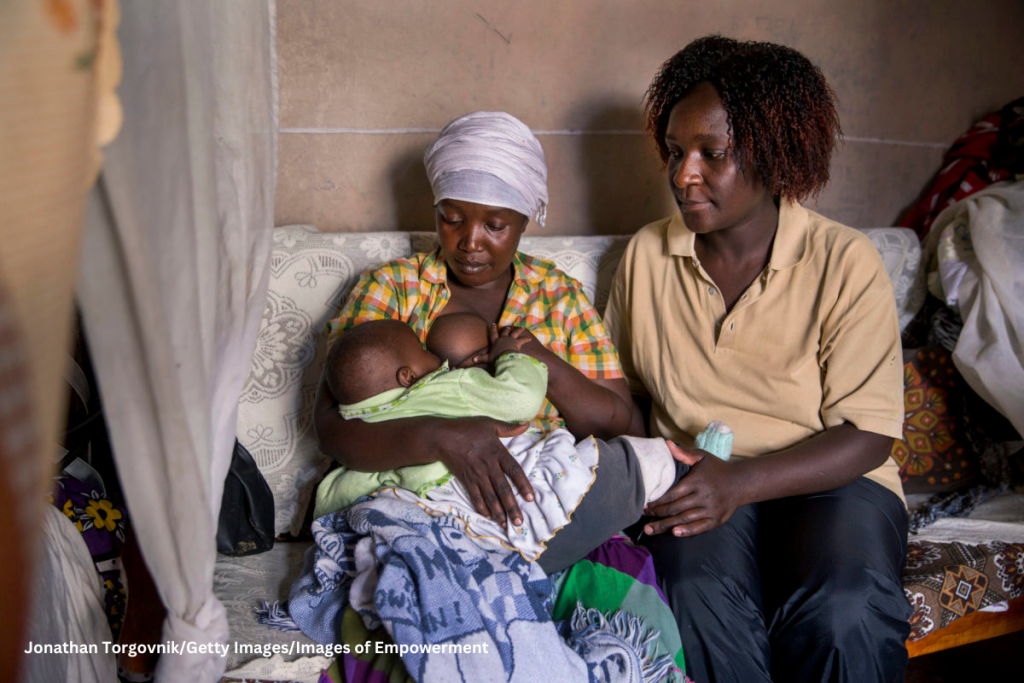
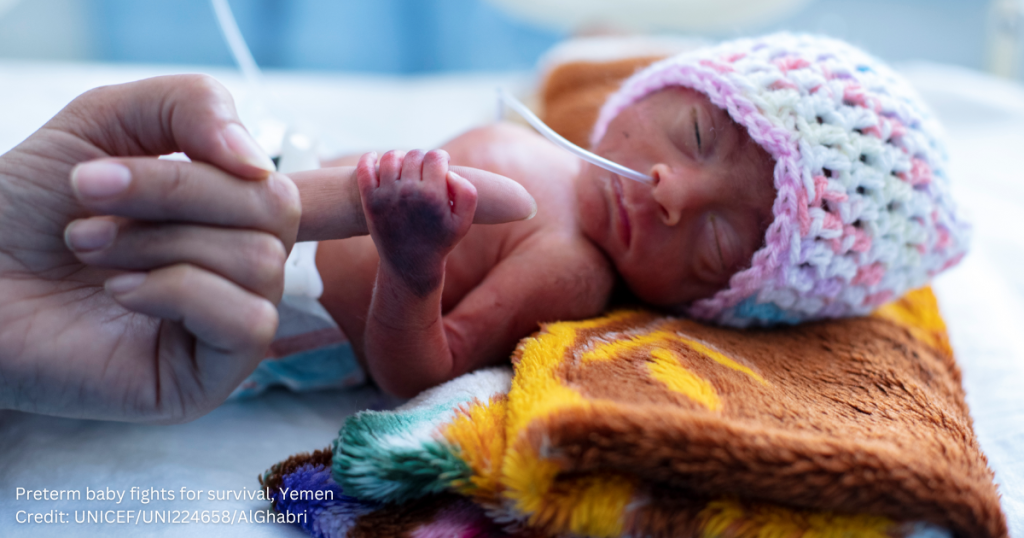
We are tracking impacts on pregnant and postpartum women, newborns, and young children.
Heat-Health Measurements
One task of the HIGH Horizons project is to identify the best ways to measure the relationship between heat and maternal, newborn, and child health.
HIGH Horizons researchers are working to select key public health indicators, statistical measurements that can provide insights into the impact of heat on the health of pregnant and postpartum women, infants, and young children.
Examples of common indicators used across public health include measurements of health status, such as the maternal mortality ratio and the neonatal mortality rate, as well as measurements of risk factors, such as the level of air pollution exposure.
Pregnant and postpartum women, newborns, and young children
Our research explores the relationship between different types of exposure to heat and a variety of possible health outcomes.
We are researching questions such as:
How many women had premature births during periods of extreme heat
How much does an increase in heat affect the number of women in labour requiring caesarean sections?
In what ways does heat directly affect the incidence of diarrhoea and asthma in children?
Evaluating Our Work
We will share findings from our research with a World Health Organization Expert Group to assess evidence from different sources and prioritize a list of indicators that countries can adapt to monitor heat impacts near them.
We will also have discussions with health policy makers and program managers in countries to learn more about how well these indicators work for them in terms of the availability of the data, the feasibility of using the data, and the potential of the data for decision-making.
Informing Policies and Practices
With strong data in hand, policy makers and public health leaders can then use these indicators to inform their work at the global, EU, national, and local level.
Subcontractor
The Epidemiology department of the Lazio Region in Rome, ASL Roma 1, is subcontracted by Karolinska Institutet, one of the HIGH Horizons partners, to establish a regional MNCH database for Lazio, Italy, and related analyses of short- and long-term heat exposure on perinatal health in Italy. ASL Roma 1 has authorised access to the Lazio regional birth registry required for this task.
Publication: Caesarean sections and low birth weight in Kenya related to higher heat stress A new HIGH Horizons study published in the Journal of Climate